
Six weeks after a knee replacement is an important checkpoint. The first difficult weeks of pain discomfort and mobility restraints are behind you, but your knee probably does not feel completely "normal" yet.
So, where should you be at this point? What does "normal" look like a month and a half in?
What post-op progress often looks like
For many knee replacement patients, the six-week mark means significant gains and continued niggles.
Improvements to expect
Everyday movement should become easier. You may be walking more comfortably, managing stairs with greater confidence, getting around without relying as heavily on a walking aid as before, or be able to stand at the kitchen counter for longer.
Sleeping often improves around this point, too, as the night-time ache settles.
Many patients begin returning to normal daily activities at this stage. If it was your right knee, your surgeon may also be ready to clear you to drive again, but that depends on how well you can control the leg, so wait for their go-ahead.
When it comes to range of motion, most people are working towards a knee that straightens almost fully and bends past 90 degrees, with many reaching 110 degrees or more. That is enough to climb stairs and get up from a low chair. Your own numbers may be a little ahead or behind, and your physiotherapist can tell you what is realistic for you.
Normal discomfort
As your knee is steadily gaining movement and strength, some swelling, stiffness, and pain can still be present.
Swelling often builds up towards the end of a busy day, and the knee may feel warm or tight when you first get up. A numb or tingly patch around the scar is also very common and can hang around for months. Stiffness after sitting for a while is normal and usually eases once you get moving.
After running errands or taking a walk, you might still experience pain. This is the knee telling you it has reached its limit for now, and it doesn’t mean something has gone wrong. The pattern matters more than any single sore day. Pain that settles with rest, elevation and ice, and is gradually happening less often, is a good sign.
Remember that recovery after a knee replacement takes months, not weeks, and no two patients progress at exactly the same pace. The more useful question to ask yourself is whether you are steadily continuing to improve.
Building strength for the next stage
At six weeks, rehabilitation usually focuses on improving your knee movement, rebuilding strength in the muscles around the knee and hip, restoring a more natural walking pattern, and preparing you for the activities you want to return to.
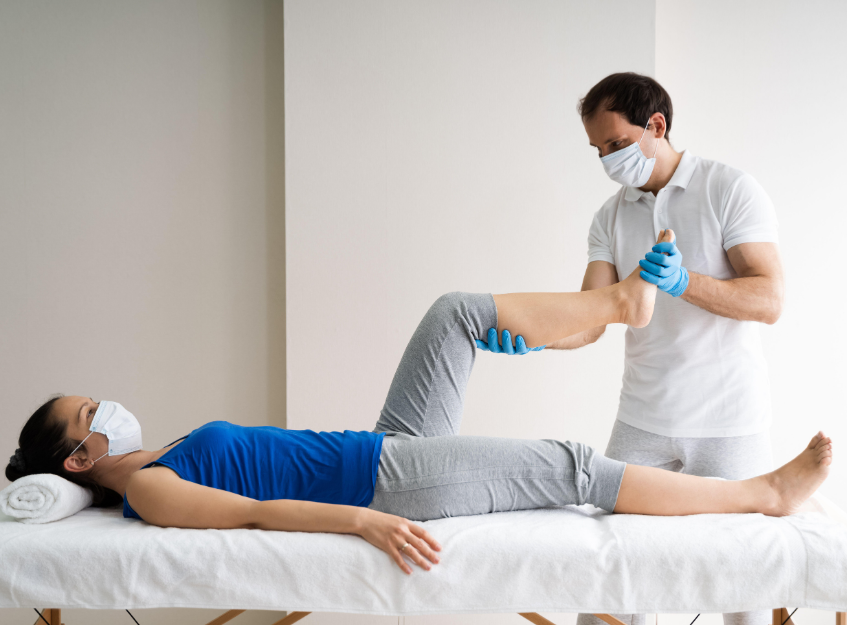
This is also the stage where regular physiotherapy makes a real difference. A physiotherapist can measure how far your knee bends and straightens, watch how you walk, and adjust your exercises as you improve, so you are always working at the right level for your unique recovery process. If you cannot drive yet, consider home visits rather than skipping.
Between sessions, small daily habits matter just as much: doing your home exercises, going for short walks, and elevating or icing your knee when it feels sore. Progress can feel frustratingly slow, so notice the small wins, like getting out of the car more easily or standing for longer while you cook the meals you love.
If you are still struggling significantly with walking, movement is not improving, or pain and swelling are getting worse rather than better, it is worth discussing this with your physiotherapist or surgeon.
Remember, six weeks is a milestone, not a finish line.
Need a boost in your recovery?
If you feel like your progress has stalled, our experienced team of physiotherapists and biokineticist are here to help you through the rehabilitation phase and get you back to dancing (or whatever else you feel like doing with your new knee). You're welcome to book an appointment.